


 May 21, 2026
Signs Your Car
Needs Repainting.
Fading, Peeling, and Beyond
Last updated: 21 May 2026. Reading time: 12 minutes.
You have noticed it slowly. The car that once looked deep and glossy now seems a little flat. Perhaps a patch of paint has begun to lift, perhaps the colour has faded on the roof and bonnet, or perhaps something has appeared that simply was not there before. And a quiet question forms. Does the car need repainting?
It is a genuinely useful question to be able to answer for yourself.
This guide is a friendly, practical look at the signs your car needs a repaint, written to help you read your own car's paint with clear eyes. It explains the difference between paint that simply looks tired and paint that has truly failed, walks through the specific signs to watch for, and honestly compares when a repaint is needed and when a smaller fix will do. There is nothing to decide here, only a useful understanding to gain.
1. Why knowing the signs your car needs a repaint matters
Before the signs themselves, it is worth understanding why reading them well genuinely matters.
The car that looks tired
Almost every car reaches a point where its paint no longer looks its best. The colour dulls, marks appear, and the finish loses the depth it once had. It is a normal part of a car's life, especially in a demanding climate. The question is what that tiredness actually means.
Why it helps to read the signs
The trouble is that very different paint problems can look broadly similar to an untrained eye. Some are purely cosmetic and easily addressed. Others are genuine failures that, left alone, lead to far worse damage. Telling them apart is the difference between a calm, sensible response and either needless worry or costly neglect.
What this guide will show you
This guide gives you the signs in two clear groups, the cosmetic signs, where the paint looks tired but is still sound, and the failure signs, where the paint has genuinely begun to fail. It explains each one plainly. The sun and pollution that drive much of this damage, recorded by the India Meteorological Department and the Central Pollution Control Board, make these signs especially worth knowing in Lucknow.
Implications of misreading the signs
An owner who misreads the signs can go wrong in two ways. They may rush to an expensive full repaint when a simple polish would have done, or they may ignore genuine paint failure until rust has taken hold. Reading the signs correctly avoids both mistakes.
Steps to take now
As you read on, picture your own car, and the specific marks or changes you have noticed. The signs are easiest to understand with a real car in mind, and by the end you will be able to place whatever you have seen into the right group.
2. The one question that matters. Is your paint still protecting the metal
Before listing the signs, there is one idea that makes all of them clear. It is the most important point in this guide.
Paint is protection, not only looks
Most owners think of car paint purely as appearance. It is far more than that. Paint, and especially its clear coat, is a sealed barrier that protects the metal body underneath from air, water and the elements. The good looks are real, but the protection is the deeper purpose.
The two kinds of paint problem
This is why paint problems fall into two genuinely different kinds. There are cosmetic problems, where the paint looks tired but the barrier is still intact and the metal is still sealed and safe. And there are failure problems, where the paint has broken down to the point that it no longer seals and protects the metal at all.
Why this difference changes everything
The difference matters enormously, because the two need completely different responses. A cosmetic problem is, at heart, a question of appearance, and you may choose to address it whenever you wish. A failure problem is urgent, because once the metal is exposed, rust begins, and rust spreads. The honest question behind every sign in this guide is simply this. Is the paint still protecting the metal, or not.
Steps to hold this question in mind
As you read the next two sections, keep that single question with you. The cosmetic signs are the paint looking tired while still doing its protective job. The failure signs are the paint no longer doing that job. That distinction will guide every sensible decision.
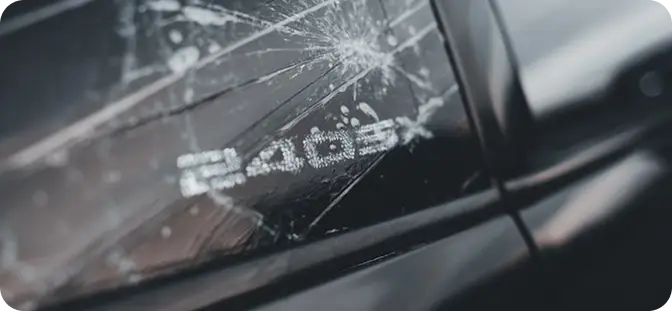
3. The cosmetic signs. When paint looks tired but is sound
The first group of signs shows a finish that has aged and lost its looks, while the paint barrier itself is generally still intact. These are real, but they are rarely urgent.
Fading and an oxidised, chalky look
The most common cosmetic sign is fading. Under constant sun, the colour slowly loses its richness and looks flat and washed out, often worst on the roof, bonnet and boot. In time the surface can feel slightly chalky or powdery to the touch, which is oxidation of the clear coat. The colour beneath is usually still sound.
Swirl marks and a haze of fine scratches
A second cosmetic sign is a fine haze of tiny scratches, known as swirl marks, often from incorrect washing and wiping over the years. In bright light they show as faint, cobweb like patterns that scatter the light and make the paint look dull. They sit in the clear coat, while the paint stays protected.
Water spots and staining
A third cosmetic sign is water spotting and light staining, faint rings or marks left where hard water or contaminants have dried on the surface. They affect how the finish looks rather than whether it protects, and they are usually a surface level concern.
Small chips that have not reached the metal
A fourth sign is small stone chips and nicks that have not gone all the way through to bare metal. While any chip is worth attention, a shallow chip that has not exposed metal is a minor, localised matter rather than a sign of widespread paint failure.
4. The failure signs. When paint stops protecting
The second group is more serious. These are the signs that the paint has genuinely begun to fail, and the protective barrier is breaking down. These are the beyond in fading, peeling and beyond, and they deserve prompt attention.
Clear coat peeling and flaking
The clearest failure sign is peeling. This is usually the clear coat separating from the colour beneath and lifting away in flakes or patches, often likened to peeling sunburnt skin. It cannot be polished back, because the protective layer is physically coming off. Where the clear coat peels, the paint below is left exposed.
Cracking and crazing in the clear coat
A second failure sign is cracking, sometimes called crazing, a network of fine cracks spreading across the clear coat. It usually follows long sun exposure or ageing. Once the clear coat has cracked through, its sealed barrier is broken, and moisture can begin to reach the layers beneath.
Bubbling and blistering
A third failure sign is bubbling, small raised blisters in the surface of the paint. These typically mean that air, moisture or corrosion has become trapped beneath the paint and is lifting it. Bubbling is a warning that the layers are separating and that trouble is developing underneath.
Rust spots and corrosion
A fourth failure sign, and the most serious, is rust. Brown or orange spotting, often starting at edges, seams or chips, means corrosion has begun on the metal itself. Rust does not stay still. It spreads beneath the surrounding paint, so it is the sign that most clearly calls for prompt, proper attention.
Bare metal or primer showing through
A fifth failure sign is bare metal or grey primer visible through the paint, whether from a deep scratch, a large chip or worn through paint. Wherever metal is exposed, the barrier is gone at that spot, and that exposed metal will begin to rust if it is left untreated.
5. The honest comparison. Repaint, or a smaller fix
Recognising the signs leads naturally to an honest question. Does what you have seen actually call for a repaint, or for something smaller. This is where many owners over react or under react, so it is worth being clear.
A repaint is not always the answer
It is honest to say plainly that a full repaint is not always needed, and is in fact the largest answer to a paint problem. Many cosmetic issues can be improved by far simpler means. Jumping straight to a full repaint, when a smaller fix would serve, is a common and avoidable expense.
When a smaller fix is enough
The cosmetic signs from section three can often be addressed without repainting. While the clear coat is still intact, fading, swirl marks, water spots and light dullness can frequently be improved by professional polishing, also called paint correction, which restores the clear coat and brings back gloss. Small chips can be handled with touch up or minor repair. The key condition is that the clear coat is still there to work with.
When a repaint is genuinely needed
The failure signs from section four are different. Once the clear coat has peeled, cracked or failed, polishing cannot bring it back, and the affected area genuinely needs repainting. Bubbling, rust and exposed metal call for proper repair and repainting without delay, because the paint has stopped protecting the metal. Where damage is limited to one or two panels, a panel repaint may be enough rather than the whole car.
Implications of choosing the wrong response
Choosing the wrong response has a real cost. Repainting a car that only needed a polish wastes money. Polishing or ignoring a car whose clear coat has truly failed wastes effort and lets rust advance. Matching the response to the sign is what keeps the decision sensible.
| What you are seeing | What it usually needs | Why |
|---|---|---|
| Light fading, swirl marks, water spots | Polishing or paint correction | The defect is in the clear coat, which can often be restored |
| Small stone chips, not through to metal | Touch up or minor repair | A small, localised fix is enough |
| Damage limited to one or two panels | A spot or single panel repaint | The sound panels do not need repainting |
| Peeling, cracking or widespread fading | A repaint of the affected areas or car | The clear coat has failed and cannot be restored |
| Bubbling, rust or bare metal showing | Proper repair and repainting, without delay | The paint has stopped protecting the metal |
Steps to weigh what you see
When you notice something on your car's paint, place it honestly into the table above. Ask the one question from section two. Is the paint still protecting the metal. If it is, you likely have time and choices. If it is not, prompt action is the kind response to your car.
6. Conclusion. Reading the signs your car needs a repaint
Knowing whether a car needs repainting is a genuinely useful skill, and it comes down to one clear idea. Car paint is not only appearance. It is the barrier that protects the metal, and the signs that matter most are the ones that tell you whether that barrier is still doing its job.
The cosmetic signs, fading, swirl marks, water spots and shallow chips, show a finish that looks tired while the paint is still sound. They are rarely urgent, and while the clear coat is intact they can often be improved without a full repaint. The failure signs, peeling, cracking, bubbling, rust and exposed metal, show that the paint has stopped protecting the car. These genuinely call for repainting, and for prompt attention, because the damage only spreads.
You do not need to decide anything today. This has simply been about understanding what your car's paint is telling you, so that whenever you do act, you act on a clear and honest reading rather than a guess.
If you would like to continue, our guide to the signs of a good paint job helps you judge any repaint, and our guide to car painting cost in Lucknow explains what repainting involves. If a question ever comes up about your car's paint, the team at Colomoto is always happy to take an honest look and share advice with no pressure at all. Knowing the signs your car needs a repaint simply means you will always understand what you are looking at.
Frequently asked questions
The signs fall into two groups. Cosmetic signs, such as fading, swirl marks and water spots, show tired but sound paint and rarely need a full repaint. Failure signs, such as peeling, cracking, bubbling, rust and exposed metal, show that the paint has stopped protecting the car and genuinely call for repainting.
Not necessarily. Fading is usually a cosmetic sign, and while the clear coat is still intact, the colour beneath is often still sound. Mild to moderate fading can frequently be improved with professional polishing, also called paint correction, rather than a full repaint. Only severe, widespread fading typically calls for repainting.
Peeling usually means the clear coat, the protective top layer, is separating from the colour beneath and lifting away in flakes or patches. It is a genuine paint failure. It cannot be polished back, because the protective layer is physically coming off, so a peeling area needs to be repainted.
Often, yes, if the clear coat is still intact. Professional polishing can remove the oxidised, dull layer and restore gloss, and a wax or sealant then helps protect it. If the clear coat itself has failed, by peeling or cracking, polishing cannot help and the affected area needs repainting.
Yes, and it is one of the most important signs. Rust means corrosion has begun on the metal itself, usually because the paint barrier has been broken. Rust spreads beneath surrounding paint if left alone, so it calls for proper repair and repainting promptly rather than being delayed.
Paint correction is a careful polishing process that restores an existing, intact clear coat, improving fading, swirl marks and dullness. A repaint applies new paint to the car. Correction works only while the clear coat is sound. Once the paint has failed, correction cannot help and repainting is needed.
Clear coat cracking, or crazing, is usually caused by long term sun and ultraviolet exposure and ageing, and sometimes by a poor original paint application. It appears as a network of fine cracks. Once the clear coat has cracked through, its protective seal is broken, and the affected area generally needs repainting.
It depends on the damage. If paint failure is limited to one or two panels, a panel repaint may be enough. If fading or failure is widespread, a fuller repaint gives a more consistent result, since a single new panel can be hard to match perfectly to old, faded paint around it.
Helpful resources
For background on the conditions that cause car paint to fade and fail, these government sources are useful.
Resources We Used
This guide is based on industry-standard knowledge and real world car care experience from Lucknow. Here are some trusted sources if you want to explore further:
- India Meteorological Department The official source for Lucknow heat and sun exposure data, for understanding the UV and temperature conditions that drive paint fading and clear coat failure.
- Central Pollution Control Board Government air quality information that explains the pollution that contributes to paint damage in Lucknow, for understanding the environmental pressure on a car's finish.
A friendly word about your car's paint
This guide has simply been about understanding what your car's paint is telling you, and there is nothing you need to act on today. If a question ever comes up, or you would like an honest look at your car's finish with no pressure at all, the team at Colomoto is always happy to help. Call or message on +91 7388800192, email info@colomoto.in, or visit 323, Sultanpur Road, Arjunganj, Ahmamau, Lucknow, open Thursday to Tuesday between 9 am and 7 pm. The next time you notice something on your paint, you will know exactly what it means.

