


 May 21, 2026
Winter Car Care in India.
A Lucknow Owner Guide to
Fog, Cold and Paint Oxidation
Last updated. 21 May 2026. Reading time. 12 minutes.
When the Lucknow winter arrives, most car owners quietly relax. The fierce summer sun is gone, the monsoon rain has passed, and the cool, calm mornings feel kind to everything, including the car. It is easy to assume that winter is the season your car needs the least attention.
That assumption is exactly the thing worth a second look. The winter is gentler in some ways, but it works on your car's paint in quiet ways that are easy to miss, through fog and damp, heavy winter pollution, and the simple temptation to wash the car far less often.
This guide is a friendly, practical look at winter car care in India, written with the Lucknow winter in mind, and it is here to help you understand what the season actually does. It explains paint oxidation in plain terms, what fog and cold contribute, and the simple habits that keep a finish healthy. There is nothing to decide here, only useful things to know.
1. Winter and your car. Why the easy season is not so easy
It helps to begin with a gentle myth, because most winter paint trouble starts with a simple, understandable assumption.
The season that feels kind
After the harshness of summer and the wetness of the monsoon, the winter feels like a rest. The light is soft, the heat is gone, and a car parked outside no longer bakes in the sun. It is natural to feel that the car can simply coast through these months.
How winter actually works on paint
The truth is quieter and more interesting. Winter does not attack paint dramatically. Instead it works slowly, through the damp of fog and dew, through the heavy pollution that settles over North India in the cold months, and through the long hours the car sits exposed overnight. The harm is gradual, which is exactly why it is missed.
Implications of treating winter as a holiday
When an owner treats winter as a season off, the car quietly collects a film of grime and slowly loses its depth and shine. By the time spring arrives, the finish can look dull and tired, and the owner is left wondering when that happened. It happened across a winter of gentle neglect.
The good news
None of this is cause for worry. Winter is genuinely a manageable season, perhaps the easiest of the three to handle well. It simply asks for awareness and a few light habits rather than to be ignored. Understanding the season is most of the work.
Steps to take now
The first step is simply to know what winter does, which is what the rest of this guide explains. Read on with your own car in mind, and the season will hold no surprises.
2. What paint oxidation actually is
The subtitle of this guide mentions paint oxidation, and since the word is used often and explained rarely, it is worth understanding properly.
What oxidation means in plain terms
Your car's paint is finished with a clear coat, a protective top layer over the colour. Oxidation is the slow process in which that clear coat, and the colour beneath, react over time with oxygen, moisture and pollutants in the air. In simple terms, it is the paint slowly breaking down at the surface.
How it shows on a car
Oxidation does not appear overnight. It shows gradually, as a finish that loses its depth and glow. The paint begins to look flat, then faintly hazy, and in advanced cases takes on a dull, chalky appearance. A car that once looked rich and glossy simply looks lifeless.
Why winter speeds it up
Oxidation needs moisture and pollutants to do its work, and the North Indian winter supplies both generously. Damp fog and dew keep the surface wet for long hours, and the heavy winter pollution settles a grimy film on the paint. Together they create exactly the conditions in which oxidation quietly speeds along.
Implications of letting it advance
In its early stages, oxidation is only a loss of shine, and it can often be eased with proper care. Left for years, it can reach a point where the clear coat is genuinely degraded, and at that stage no simple cleaning will bring it back. The lesson is that oxidation is best slowed early, not corrected late.
Steps to think about it rightly
Think of oxidation not as a sudden fault but as a slow process that every car's paint undergoes, faster or slower depending on care. The aim of winter car care is simply to keep that process slow.
3. Fog and moisture. The quiet winter problem
Of all the winter conditions, fog and moisture are the ones that most directly touch your car's paint, and they are the most underestimated.
The morning the car wakes up wet
Through a Lucknow winter, a car parked outside greets most mornings covered in a fine layer of moisture. Dew settles overnight, and on foggy mornings the damp is heavier still. Long winter nights mean the car sits wet for many hours before the day warms it. Fog data for the region from the India Meteorological Department shows just how many such mornings a North Indian winter brings.
What the fog film really is
That morning moisture is not clean water. As it settles, it gathers the dust and pollution suspended in the cold winter air. What is left on the paint as the car dries is a thin, grimy, slightly acidic film. It is easy to overlook because it looks like nothing more than a dusty haze.
How this affects the paint
This film is the heart of the winter paint problem. Sitting on the surface for hours, day after day, it feeds the oxidation described in the last section, and as it dries it can leave faint streaks and mineral marks. A car never wiped of this film slowly loses its clarity.
Implications of letting the film sit
An owner who lets the fog and dew film build untouched across the whole winter is, in effect, leaving the paint under a mild, grimy coating for months. The dullness that appears by spring is the natural result.
Steps to notice and respond
The simple response is awareness. Once you notice the morning film for what it is, gently wiping it away becomes an obvious small habit, and section six explains how to do that safely.
4. Cold and winter air. What the season does to a finish
The word cold is in this guide's title, so it is fair to look honestly at what the cold itself does, and what it does not.
What the cold itself does, honestly
In the Lucknow winter, the cold is real but moderate. It does not snow on the plains, and temperatures rarely fall to the extremes seen in colder countries. The cold can make paint and trim slightly more brittle, but on its own, the mild North Indian cold is not the main threat to your finish. It is honest to say so plainly.
The real winter villain, pollution
The genuine winter pressure is the air itself. The cold months are the heavy pollution season across North India, when smog settles thickly over cities. Air quality data from the Central Pollution Control Board shows how high particulate levels climb in these weeks. That pollution settles on every parked car and, mixed with fog and dew, becomes the grimy film that drives winter oxidation.
A note on road salt
Winter car advice written for colder countries often warns heavily about road salt corroding the paint and underbody. It is worth knowing that this does not apply on the Indian plains, where roads are not salted. An owner here can set that particular worry aside and focus on the conditions that genuinely matter, which are fog, moisture and pollution.
Implications of a winter of grime
A car left to sit through the winter under settling pollution, never properly cleaned, does not just look dusty. The grime works steadily on the finish, and a season of it leaves a real, visible loss of shine.
Steps to keep the season in perspective
Keep the picture clear. The cold is mild and not the main concern. The fog, moisture and winter pollution are. Caring for your car in winter means responding to those three, not fearing the temperature.
5. The winter neglect trap. Why care slips when it matters
There is one more winter factor, and it is not about the weather at all. It is about us, the owners, and it may be the most important point in this guide.
Why washing slips in winter
In winter, car washing quietly slows down. The mornings are cold, handling water is less pleasant, and the car often does not look obviously dirty under its fine grey film. So washes are postponed, and a car that was washed twice a week in other seasons may be washed far less in the cold months.
Why this matters more than it seems
This is the trap. The winter is precisely the season when a grimy, pollution laden film is settling on the paint daily. The moment owners ease off washing is the very moment the paint most needs cleaning. The conditions get harder while the care gets lighter.
The quiet result by springtime
The two trends meet quietly over the season. Pollution and fog film build up, washing slows down, and oxidation works steadily underneath. By the time the weather warms, many owners find a finish that looks noticeably duller than it did in autumn, without a single dramatic event to explain it.
Implications of the neglect habit
The honest implication is that winter paint damage is rarely caused by the season alone. It is caused by the season combined with relaxed care. The weather sets the conditions, but neglect is what lets them tell.
Steps to keep a light routine
The answer is not hard work. It is simply not letting the cold become an excuse. A light, consistent winter routine, which the next section sets out, is enough to keep the trap from closing.
6. Winter car care in India. Simple good practices for the season
Here are the practical habits that carry a car comfortably through the winter. None of them is difficult, and together they are genuinely enough.
Keep washing, gently and sensibly
The single most useful habit is simply to keep washing the car through winter, even if a little less often than in summer. Wash during the warmer part of the day rather than the cold morning, use a gentle, balanced car shampoo and a soft microfibre mitt, and rinse grit away before wiping. Washing every several days keeps the pollution film from settling in.
Wipe the morning film away
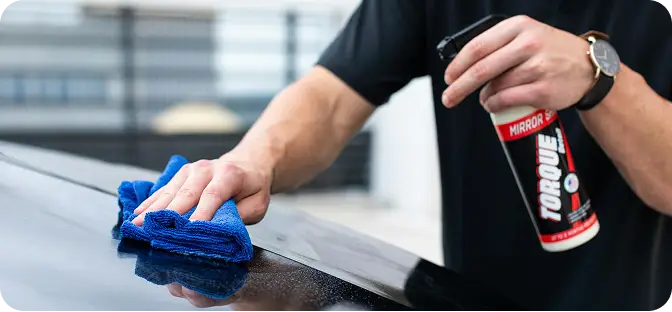
On mornings when a full wash is not practical, simply wiping the car down makes a real difference. Use a clean, soft microfibre cloth or a proper car duster to lift the dew and fog film gently away. Avoid rough cloths, old rags or tissues, which can scratch the paint. This two minute habit is one of the most valuable in winter.
Handle frost and dew without scratching
On the coldest Lucknow mornings, a light frost can form. Never scrape it off with a hard object, as that scratches both glass and paint. Let the car warm gently, or use lukewarm, not hot, water to ease frost away. Patience here protects the finish.
Keep a protective layer on the paint
Bare paint takes the winter film directly. A protective layer, whether a simple wax or a longer lasting ceramic coating, sits over the clear coat so that grime is easier to remove and oxidation is slowed. A wax is quick but short lived, while a ceramic or graphene coating lasts far longer and makes the daily fog film release easily. A protective layer is one of the simplest ways to make winter care lighter.
Park with a little thought
Where the car spends the night matters. Covered parking shelters it from the heaviest dew and fog and shortens the hours it sits damp. If covered parking is not available, a soft, breathable cover placed on a clean car helps, as long as it is never put over a dusty car.
7. The honest comparison. Winter myths and winter facts
A clear way to gather all of this together is to set the common winter beliefs honestly against the facts. Most winter paint trouble grows from a few comfortable myths.
Myth, winter is the easy season
It is widely felt that winter is the season a car can simply coast through. The fact is gentler but firmer. Winter does not harm paint dramatically, but it works quietly through fog, moisture and pollution, and that quiet work adds up across the months.
Myth, no sun or rain means safe paint
Because winter lacks the fierce sun of summer and the rain of the monsoon, many assume the paint is safe. In fact the daily fog and pollution film, and the slow oxidation it feeds, need neither strong sun nor rain to do their work.
Myth, washing can wait until spring
The cold makes it tempting to postpone washing until the weather warms. The fact is that winter is exactly when a grimy film settles daily, so pausing washing is pausing care at the worst possible time.
Myth, a dull car will recover on its own
Some owners assume a finish that looks dull in winter will simply brighten again in summer. Oxidation does not reverse on its own. A dull finish needs care, and if neglected long enough, professional correction.
| Common winter belief | The honest reality |
|---|---|
| Winter is the easy season for a car | Winter works on paint quietly, through fog, moisture and pollution |
| No sun or rain means the paint is safe | The daily fog and pollution film and slow oxidation need neither |
| Washing can wait until spring | Skipping washing lets a grimy film sit and dull the paint |
| A dull winter finish recovers by itself | Oxidation does not reverse on its own, it needs care |
What the comparison tells us
Set side by side, the pattern is clear. Winter is not dangerous, but it is not a holiday for your car either. A little honest awareness, replacing the comfortable myths, is most of what keeps a finish healthy through the season.
8. Conclusion. Confident winter car care in India
Caring for a car through the winter turns out to be simple once the season is understood. Winter does not attack paint the way summer or the monsoon can. It works quietly, through the fog and dew that leave a daily film, through the heavy winter pollution that settles into that film, and through the slow oxidation the two feed. Most of all, it works through the gentle neglect that the cold season invites.
The encouraging truth is that none of this needs much effort to manage. Keep washing through the winter, wipe the morning film away, treat frost and dew gently, keep a protective layer on the paint, and park with a little thought. These light habits, and the awareness behind them, are genuinely enough.
If you would like to keep the same easy awareness through the rest of the year, our summer car care guide for Lucknow and monsoon car care guide carry the same friendly approach into the other seasons.
There is nothing here that needs deciding today. This has simply been a guide to understanding the season. If a question ever comes up about your car's finish, the friendly team at Colomoto is always happy to share honest advice with no pressure at all. Understood this way, winter car care in India is one of the simplest and calmest parts of owning a car.
Frequently asked questions
Not dramatically, but yes, quietly. Winter works on paint through fog and dew that leave a daily grimy film, through the heavy pollution of the cold months, and through the slow oxidation these feed. The damage is gradual and is made worse by the reduced washing that the cold season tends to bring.
Paint oxidation is the slow process in which a car's clear coat and colour react over time with oxygen, moisture and pollutants in the air. It shows as a gradual loss of gloss and depth, leaving the finish flat and, in advanced cases, dull and chalky. Winter conditions speed it along.
Yes. It is one of the most useful winter habits. Winter settles a pollution and fog film on the paint daily, so the car genuinely needs cleaning. Wash a little less often than in summer if you wish, during the warmer part of the day, using a gentle shampoo and a soft microfibre mitt.
Fog itself is moisture, but as it settles it gathers dust and pollution from the cold air, leaving a thin, grimy, slightly acidic film on the paint. Sitting on the surface for the long hours of a winter night, day after day, this film feeds oxidation and can leave faint marks as it dries.
Usually because of a build up of the fog and pollution film, combined with slower winter washing and gradual oxidation. None of these is dramatic on its own, but together, across a whole season, they leave the finish looking flat and tired by the time spring arrives.
Winter sun is far gentler than the fierce summer sun and is not a major concern for paint. The genuine winter pressures are fog, moisture and pollution rather than sunlight. A protective layer on the paint comfortably handles the mild winter sun along with everything else.
Never scrape frost off with a hard object, as that can scratch both glass and paint. Instead, let the car warm gently in the morning, or ease the frost away with lukewarm, never hot, water. A little patience on a frosty morning protects the finish.
You do not need to do anything elaborate, but a little care genuinely helps. Keeping the car washed, wiping away the morning film and keeping a protective layer such as a wax or a coating on the paint are simple measures that keep winter oxidation slow and the finish healthy.
Helpful resources
For further reading on the winter conditions that affect car paint in Lucknow and across North India, these government sources are useful.
Resources We Used
This guide is based on Lucknow climate data and honest experience of the North Indian winter. Here are the trusted sources used in its preparation:
- India Meteorological Department The official source for fog, temperature and seasonal data for Lucknow and North India.
- Central Pollution Control Board Government air quality information that explains the heavy winter pollution that settles on a car through the cold months.
A friendly word as the winter sets in
This guide has simply been about understanding the season, and there is nothing you need to act on today. If a question ever comes up about your car's finish, or you would like friendly, honest advice with no pressure, the team at Colomoto is always happy to help. Call or message on +91 7388800192, email info@colomoto.in, or visit 323, Sultanpur Road, Arjunganj, Ahmamau, Lucknow, open Thursday to Tuesday between 9 am and 7 pm. Above all, enjoy the winter, and let your car enjoy it too.

